
Import Alert Guide
Import Alert 99-19 — Food Products Detained for Salmonella
A plain-language guide to FDA Import Alert 99-19, which allows detention without physical examination of food products for Salmonella that are not covered by other import alerts. What it covers, the charge it carries, and what per-shipment testing evidence typically involves.
The Short Version
What Is Import Alert 99-19?
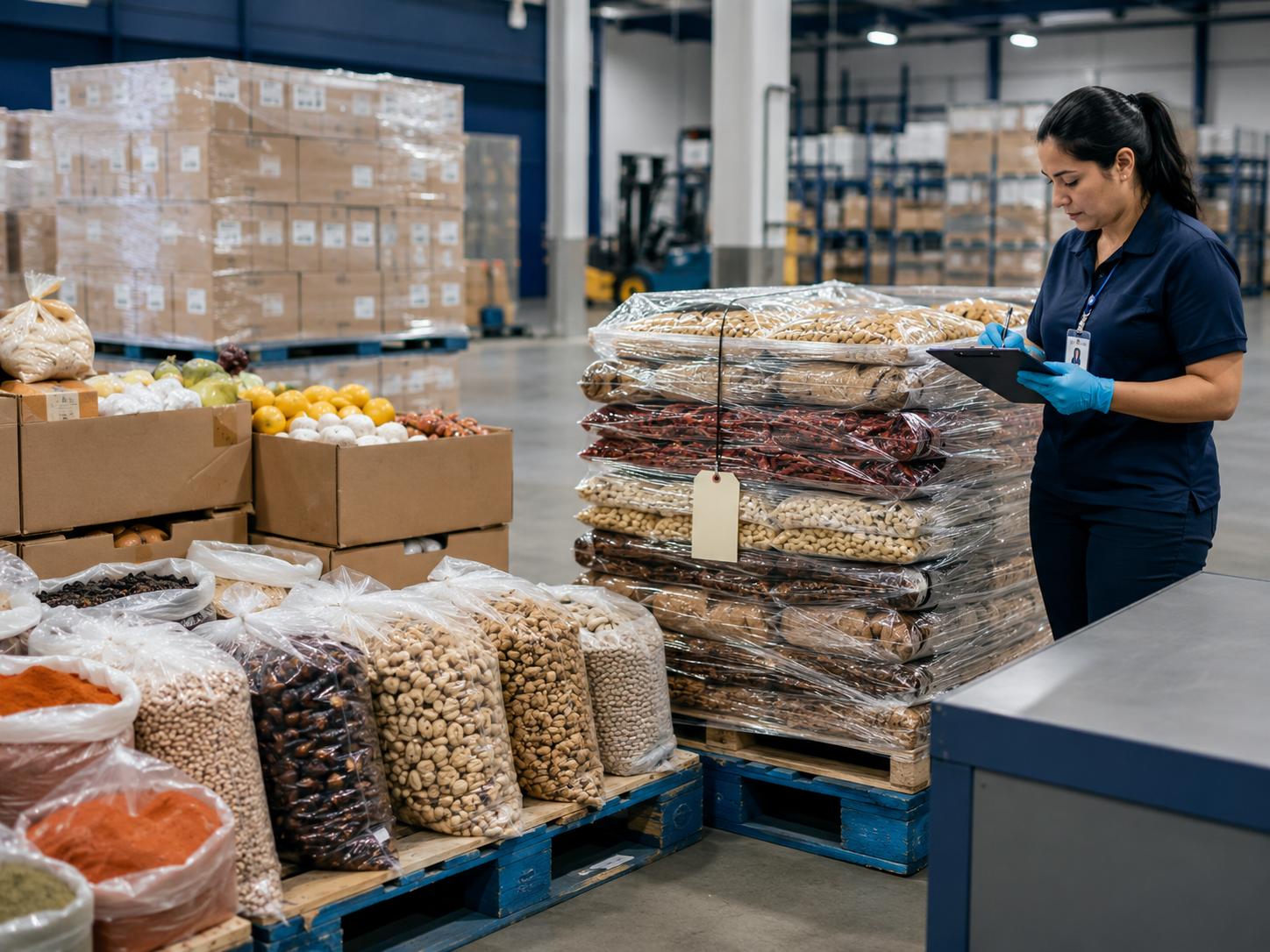
Import Alert 99-19 permits FDA to detain, without physical examination, food products from Red List firms due to the presence of Salmonella — specifically products that are not already covered by another, more specific import alert. It is the broad "catch-all" food Salmonella alert, applying to commodities such as spices, produce, and dry goods that don't fall under a dedicated alert. Any confirmed Salmonella finding by FDA's methods renders the product adulterated.
- Alert Number
- 99-19
- Products Covered
- Food products from Red List firms not covered by other Salmonella alerts — many spices, produce, and dry goods
- Charge
- Adulteration — appears to contain Salmonella, a poisonous and deleterious substance (Section 402(a)(1))
- Mechanism
- Detention Without Physical Examination (DWPE), firm-specific Red List
- FDA Standard
- Zero / non-detectable Salmonella by FDA methodology or equivalent
- Official Text
- FDA Import Alert 99-19
The Background
What 99-19 Covers — and What It Doesn't
Salmonella is a leading cause of foodborne illness and is found in many foods — spices, meats, seafood, and produce among them. FDA applies a strict standard: when Salmonella is detected by its standard methods, the food is considered adulterated.
99-19 is deliberately the residual alert — it applies to food products with Salmonella that are not already addressed by a more specific alert. FDA carves out several categories that belong to their own alerts, including: seafood (covered by Industry Code 16 alerts such as 16-81), coconut and coconut products (Import Alert 23-12), cheese and cheese products (Import Alert 12-10), papaya from Mexico (Import Alert 21-17), cantaloupe from Mexico (Import Alert 22-01), and black pepper from India and Brazil (Import Alerts 28-02 and 28-04).
Firms with recurring Salmonella violations under this alert may face further enforcement for the appearance of inadequate preventive controls or GMPs — for example, under Import Alert 99-43 for ready-to-eat foods prepared, packed, or held under insanitary conditions.
The Evidence
What Per-Shipment Testing Typically Involves
To secure release of an individual detained shipment, the responsible party generally provides evidence that the specific product does not bear or contain Salmonella — commonly private laboratory analysis of a representative sample of the detained product under documented custody.
-
Representative Sampling
Samples are collected from the detained lot under a documented plan and chain of custody, sized to the analytical method and the laboratory's requirements for the commodity.
-
LAAF-Accredited Analysis
Salmonella analysis follows FDA-recognized methodology. As of December 1, 2024, food testing to support admission of detained food must be conducted by a LAAF-accredited laboratory; laboratory fit is confirmed during matching.
-
Your Team Submits
Results and custody records are organized into a case file; you and your authorized parties submit to the FDA compliance office named on the notice. FDA may collect audit samples before deciding, and makes the final admissibility decision.
Confirm the right alert first. Because 99-19 excludes products covered by specific alerts, it's worth confirming your product isn't actually under a dedicated one (for example, black pepper under 28-02) — the correct alert shapes the sampling and method. LAAF applies to detained food since December 1, 2024. See our laboratory testing coordination guide.
Be Realistic
What This Alert Means in Practice
Honest limitations
- Zero tolerance. A single confirmed Salmonella finding fails the shipment; testing cannot change what is in the product.
- Recurring violations escalate. A pattern of Salmonella findings can draw additional enforcement for insanitary conditions or inadequate controls, beyond this alert alone.
- Release is not removal. Winning release of one shipment does not take the firm off the Red List — future shipments are still detained until removal succeeds.
- Removal needs resolved root cause. Removal requires a petition to FDA with evidence the conditions causing the violation were resolved; consistent non-violative shipments support it but do not by themselves accomplish it.
Related
Related Alerts & Guides
Seafood — Salmonella
The seafood-specific Salmonella alert — one of the carve-outs 99-19 does not cover.
Read the guide IA 23-14Food Products — Mycotoxins
Another broad food contamination alert — aflatoxin and other mycotoxins rather than pathogens.
Read the guide IndustrySpices, Produce & Dry Goods
Category overview: common detention reasons across food commodities and the testing they require.
View industriesFood Detained Under 99-19?
Bring Us the Notice — We'll Confirm the Alert and the Method
Send your FDA Notice of Action, product details, and shipment location. You'll get an honest, case-specific read — including confirming whether your product belongs under 99-19 or a more specific alert — before any commitment.
Urgent detention matters receive priority intake review.
FDA Detention Sampling is an independent private company. We are not affiliated with, endorsed by, or part of the U.S. Food and Drug Administration. This guide is a plain-language summary of Import Alert 99-19; the official alert text published by FDA is authoritative and controls. Sampling, laboratory testing, documentation, and coordination services do not guarantee FDA release, admissibility, acceptance of laboratory results, removal from any import alert, or any specific regulatory outcome. FDA makes the final admissibility decision.