FDA Laboratory Testing Coordination for Detained Shipments
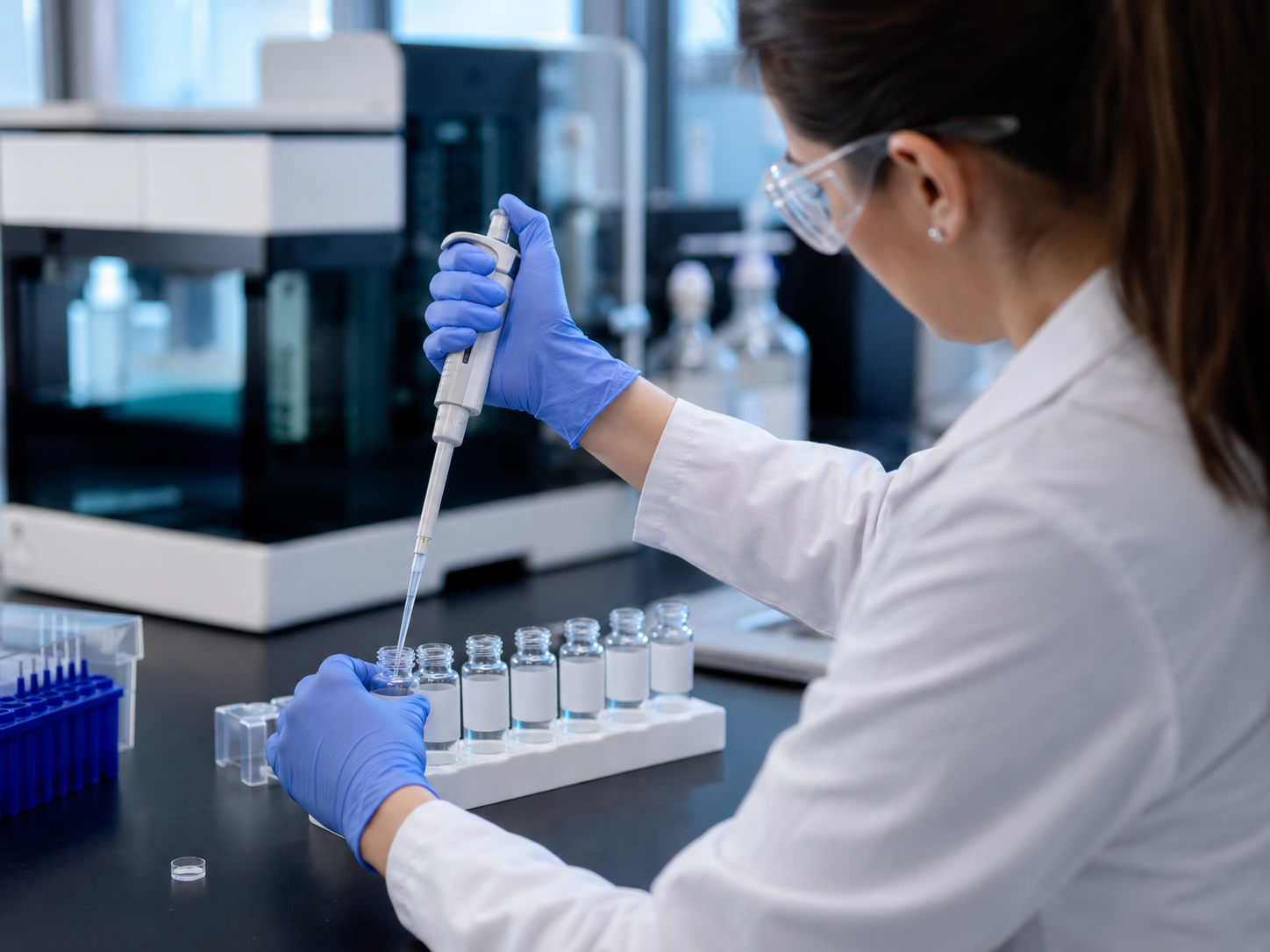
When a detention response calls for laboratory evidence, we coordinate the analysis with an appropriate independent laboratory — matching the product and detention reason to the right testing, managing sample logistics, and organizing the reports your authorized parties need.
Independent private company. Not affiliated with the U.S. Food and Drug Administration.
Plain-Language Definition
What Is FDA Laboratory Testing Coordination?
FDA laboratory testing coordination is the process of arranging independent laboratory analysis for samples collected from an FDA-detained import shipment. It covers identifying the analysis the case requires, matching it to a laboratory with the right capabilities, managing sample delivery and receiving, and organizing the resulting reports for the authorized parties responding to the detention.
Which laboratory and which analysis fit a given case depends on:
The Role of Private Laboratory Analysis in a Detention Response
When FDA detains a shipment for a suspected violation — contamination, identity, composition, or condition — the importer may respond with evidence. Independent laboratory analysis of properly collected, properly documented samples is often central to that evidence.
The laboratories coordinated for these cases are private, independent facilities. They are not FDA laboratories, and their results are one input into FDA's review — persuasive when the sampling is representative, the chain of custody is intact, and the method fits the question, but never a substitute for FDA's own decision.
That is why testing coordination is inseparable from sample collection and chain of custody: a strong result on a poorly documented sample carries little weight.
What well-coordinated testing contributes
Analysis matched to the detention reason
A laboratory with validated, appropriate methods
Samples that arrive in testable condition
An unbroken, documented chain of custody
Reports tied to specific lots and sample IDs
Records organized for the responding parties
Analysis Categories
Laboratory Analyses That May Be Coordinated
Testing falls into four broad categories. The examples below are common requests, not a complete catalog — the analysis for your case is confirmed against the detention reason and the laboratory's capabilities.
Microbiological Testing
The most common category for foods, seafood, spices, botanicals, and supplements detained for contamination concerns. Many microbiological methods involve enrichment and incubation periods that set a floor on turnaround time.
Requested when the detention involves residues, additives, or chemical contamination. Method selection matters here: the analyte, the matrix, and the required detection limits drive which laboratory can perform the work.
Used when FDA questions what a product actually is or contains — a frequent issue for supplements, pharmaceutical ingredients, and products suspected of substitution or misdeclaration.
Physical parameters support detentions involving product condition, process adequacy, or packaging — often alongside one of the other categories.
Common analyses
pH and water activity
Moisture content
Packaging and container integrity
Temperature-related evaluation
Visible condition and physical characteristics
Typical products
Canned foods, acidified foods, frozen and refrigerated products, packaged goods
Available analyses depend on the product, laboratory capabilities, validated methods, sample quantity, sample condition, and case-specific requirements. Testing does not guarantee FDA release or admission.
Laboratory Selection
How the Right Laboratory Is Matched to Your Case
Not every laboratory can run every analysis, and a mismatch costs time your response window may not have. Matching works through four checks.
Define the Required Analysis
The detention reason, the FDA notice, and any instructions from your consultant or attorney define what must actually be measured.
Confirm Method and Capability
The laboratory must run a validated, appropriate method for the analyte in your product's matrix — including any accreditation the case requires.
Verify Sample Requirements
The laboratory specifies the sample quantity, packaging, temperature, and condition it needs — before collection, so the sample arrives testable.
Align Logistics and Timing
Receiving hours, location, turnaround estimates, and reporting format are confirmed so results land with the parties who need them.
For certain food-related detention testing, FDA's Laboratory Accreditation for Analyses of Foods (LAAF) program may require the analysis to be performed by a LAAF-accredited laboratory. Whether LAAF applies depends on the product and the circumstances of the case, and is confirmed during laboratory matching.
Before Collection
Why Sample Requirements Are Confirmed Before Collection
The single most common avoidable failure in detention testing is a sample the laboratory cannot use: too little material, wrong temperature on arrival, compromised packaging, or units that don't represent the detained lot. Each one means re-sampling — more facility coordination, more courier runs, more days off your response window.
That's why laboratory requirements are confirmed first and drive the collection and handling plan, not the other way around.
Requirements confirmed with the laboratory
Minimum sample quantity per analysis
Number of units and sub-samples
Packaging and container type
Temperature during transport
Acceptable sample condition on receipt
Labeling and identification format
Receiving days and cut-off hours
Documentation to accompany the sample
Timing
What to Expect on Laboratory Turnaround
Honest answer: turnaround varies, and anyone quoting a fixed number of days for every case is guessing. What actually drives timing:
The Method Itself
Some chemical and identity analyses run in days. Certain microbiological methods require enrichment and incubation periods that cannot be compressed no matter the urgency.
The Laboratory's Queue
Laboratories schedule work in order and by capacity. Some offer expedited service for additional fees; availability is confirmed per case, never assumed.
Everything Before the Bench
Facility authorization, sampling, packaging, and courier transit all precede testing. Well-coordinated logistics is usually where the most days are saved.
Once the analysis is defined, the coordinating laboratory provides an estimated turnaround for your specific tests. Estimates are the laboratory's own and are not guaranteed.
Deliverables
Laboratory Reports and Supporting Records
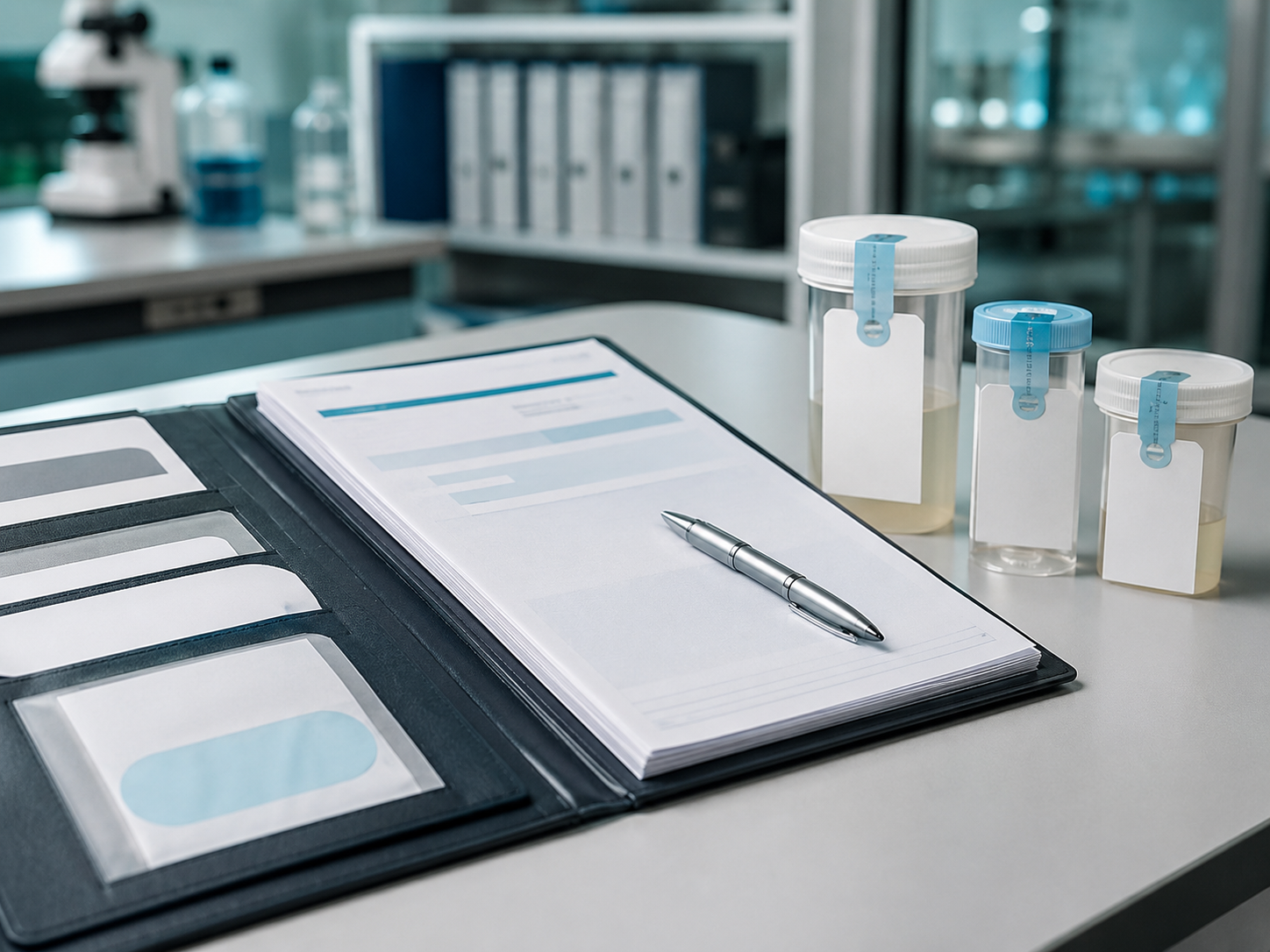
The deliverable of a testing case is a laboratory report tied — through the chain-of-custody record — to specific samples from the detained shipment. Reports and supporting records are organized into a coherent case file for you and your authorized parties.
A laboratory report typically identifies the sample and lot, the method used, the results with units and any detection limits, and the laboratory issuing it. Paired with collection records, photographs, and transfer documentation, it becomes usable evidence.
Reports are provided to you and the parties you authorize — the importer, broker, consultant, or attorney handling the response. Documents are not automatically submitted to FDA; how results are used is a decision for those authorized parties.
What Laboratory Testing Coordination Does Not Guarantee
Laboratory coordination arranges competent, documented analysis. It does not control the results, the regulator, or the third parties involved.
Testing coordination does not guarantee:
A passing or specific laboratory result
FDA acceptance of a laboratory report
FDA release or admissibility
Removal from an import alert
A specific turnaround time
Laboratory capacity or scheduling
That one round of testing will be sufficient
Any specific regulatory outcome
Laboratories perform and bill their own work independently. FDA makes the final admissibility decision based on its own review of the complete record.
Common Questions
Laboratory Testing Coordination Questions
Direct answers to the questions importers ask most about detention-related laboratory testing.
Do you operate your own laboratory?
No. Testing is coordinated with independent third-party laboratories matched to each case. We are a coordination company, not a laboratory, and we say so plainly because it matters: independence between the coordinator and the analyzing laboratory keeps the evidence clean.
The laboratory performing your analysis is identified on its own report, and it performs and bills its work independently.
Are the laboratories FDA-approved?
FDA does not "approve" private laboratories in a general sense, so any company claiming to use FDA-approved labs is using loose language. What exists are accreditations — such as ISO/IEC 17025 — and, for certain food testing, FDA's LAAF program (Laboratory Accreditation for Analyses of Foods), under which specific detention-related food analyses may need to be performed by a LAAF-accredited laboratory.
Whether LAAF or another accreditation applies to your case depends on the product and circumstances, and is confirmed during laboratory matching.
Who decides which tests are performed?
The required analysis follows from the detention reason on the FDA notice, applicable procedures, and the direction of the authorized parties handling your response — often a regulatory consultant or attorney. FDA determines its own requirements; no private company decides them.
Our role is execution: once the needed analysis is identified, we coordinate the laboratory, methods, sample requirements, and logistics.
How long does laboratory testing take?
It varies by method. Some chemical and identity analyses complete in days; certain microbiological methods require incubation periods that cannot be shortened. The laboratory's queue and the sample's arrival condition also affect timing.
Once your analysis is defined, the laboratory provides a case-specific estimate. Treat any universal turnaround promise — from anyone — with skepticism.
How much sample does the laboratory need?
It depends on the analysis and the method — quantities range widely, and some cases require multiple units or sub-samples drawn across the lot to be representative. The laboratory specifies its requirements before collection.
This is exactly why sample requirements are confirmed first: collecting too little material is the most common cause of re-sampling delays.
Can FDA reject private laboratory results?
Yes. FDA evaluates submitted evidence on its own terms and can find results insufficient — for example, if sampling wasn't representative, the chain of custody has gaps, the method wasn't appropriate, or an applicable accreditation requirement wasn't met.
Careful coordination reduces those specific risks; it cannot eliminate FDA's discretion. FDA makes the final admissibility decision.
Can testing be expedited?
Sometimes. Some laboratories offer rush service for additional fees, and logistics — sampling, packaging, courier timing, receiving hours — can often be compressed with tight coordination. What cannot be compressed are method-mandated incubation or processing periods.
If your response deadline is close, say so at intake; timing constraints shape the laboratory matching from the start.
What happens if a result is unfavorable?
The results belong to you and your authorized parties, who decide how to proceed — options may include further analysis, reconditioning proposals where applicable, or other responses, depending on the case and professional advice. Coordination does not control or predict outcomes.
Whether and how any result is used in the regulatory response is a decision for the authorized parties handling your case.
Are laboratory fees included in coordination services?
No — laboratory fees are third-party charges billed for the laboratory's own work, separate from coordination. The same applies to sampler, warehouse, and courier charges.
Whenever possible, laboratory quotes and other third-party charges are gathered and reviewed with you before work begins.
Can you coordinate testing for import alert (DWPE) shipments?
Yes. Sampling and laboratory logistics may be coordinated for shipments subject to import alerts and detention without physical examination, where private analysis is frequently part of the response. LAAF accreditation requirements are particularly relevant for certain food import alert testing.
Import alert matters usually need a broader strategy than testing alone — see the import alert testing support page for how these cases differ.
Coordinate Laboratory Testing for Your Detained Shipment
Submit your FDA Notice of Action, product details, shipment location, and any known testing requirements. Your case will be reviewed and the feasible laboratory options outlined — analysis, sample requirements, and logistics included.
FDA Detention Sampling is an independent private company. We are not affiliated with, endorsed by, or part of the U.S. Food and Drug Administration. We do not operate a laboratory; testing is performed by independent third-party laboratories. Sampling, laboratory testing, documentation, and coordination services do not guarantee FDA release, admissibility, acceptance of laboratory results, or any specific regulatory outcome. FDA makes the final admissibility decision.