
Import Alert Guide
Import Alert 53-06 — Cosmetics, Color Additive Violations
A plain-language guide to FDA Import Alert 53-06, which allows detention without physical examination of cosmetics with color additive violations. What it covers, its three kinds of violation, and what per-shipment testing or labeling evidence typically involves.
The Short Version
What Is Import Alert 53-06?
Import Alert 53-06 permits FDA to detain, without physical examination, cosmetics from Red List firms that appear to have color additive violations. Color additives in cosmetics are tightly regulated: a color must be approved for that use, some colors must be batch-certified by FDA, and any color must be properly declared on the label. A failure in any of these can make a cosmetic adulterated, misbranded, or both — and once a firm is listed, its cosmetic shipments are automatically detained.
- Alert Number
- 53-06
- Products Covered
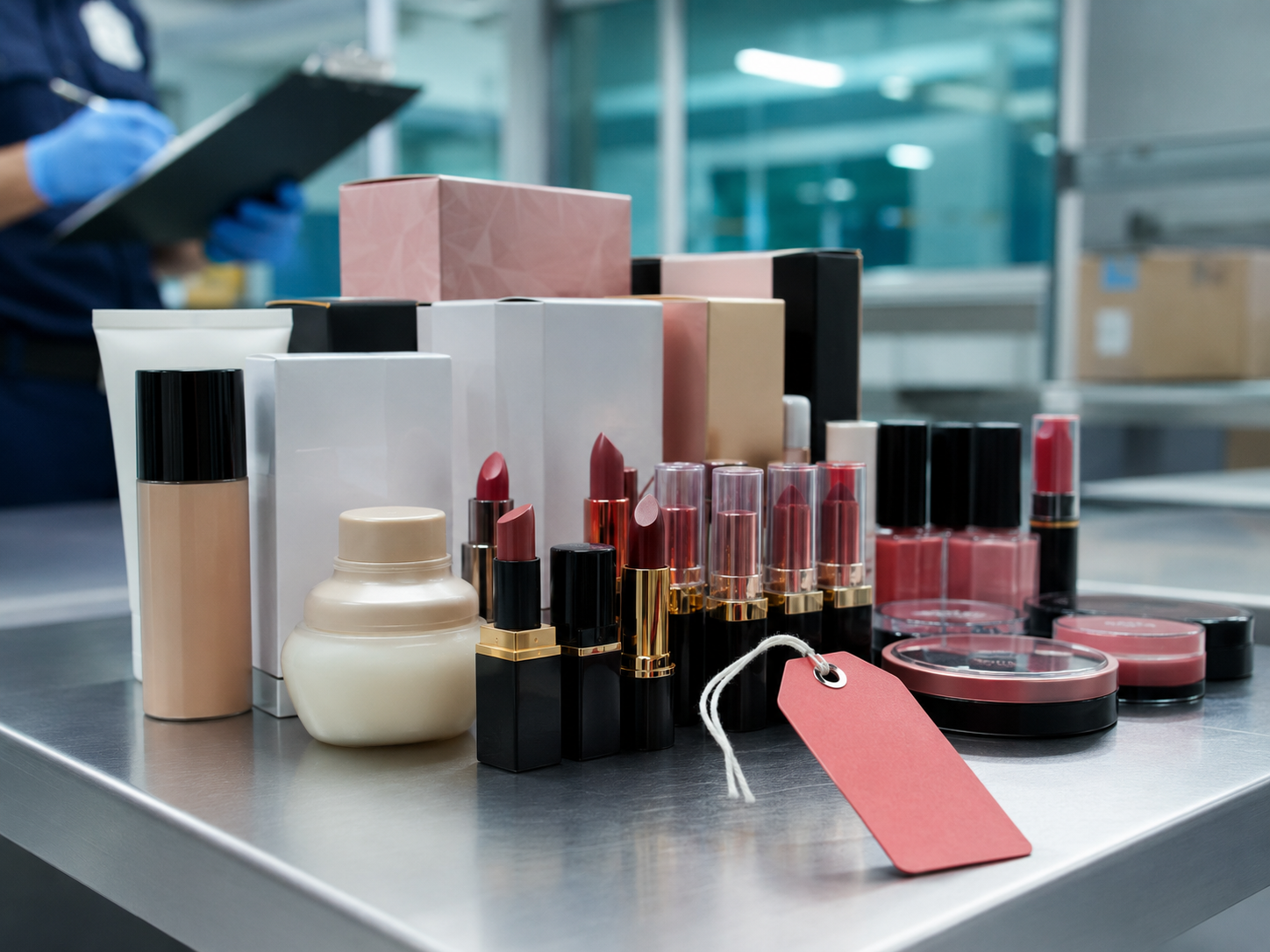
- Cosmetics from Red List firms — lipstick, eye makeup, mascara, creams, and other colored products
- Non-Permitted Color
- Adulteration — an unapproved (non-permitted) color additive is present
- Uncertified Color
- Adulteration — a color required to be FDA batch-certified is used without valid certification
- Undeclared Color
- Misbranding — a color additive is not properly declared on the label
- Official Text
- FDA Import Alert 53-06
The Background
Three Kinds of Color Violation, One Alert
Color is central to most cosmetics, which is exactly why this alert can be so costly — a single imported shipment often contains many products in many shades, and each may need to be evaluated separately. FDA has used 53-06 for decades to stop cosmetics with color problems that fall into three overlapping buckets:
Non-permitted color — a color additive that isn't approved for that cosmetic use (or is used in a way it wasn't approved for). Its presence makes the cosmetic adulterated, and clearing it generally means proving by analysis that the non-permitted color isn't there.
Uncertified color — some color additives must be batch-certified by FDA. If such a color is used without valid certification lot numbers, the cosmetic can be treated as adulterated. Here the response often centers on producing valid certification documentation.
Undeclared color — a color additive present but not properly declared on the label makes the cosmetic misbranded. For retail "consumer commodity" cosmetics, the ingredient (and color) declaration requirements are strict, and this can sometimes be corrected through labeling. (Carmine is a notable special case: undeclared carmine can be treated as both adulterated and misbranded.)
The Evidence
What Clearing a Shipment Typically Involves
The right path depends on which kind of violation applies — analysis, certification documentation, a labeling correction, or a combination. Reading the notice's charge is the essential first step.
-
Identify the Charge and Color
The notice indicates whether the issue is a non-permitted color, an uncertified color, an undeclared color, or a combination, and typically names the color. That determines whether the response is analytical, documentary, a labeling correction, or several of these.
-
Test, Certify, and/or Correct
For a non-permitted color, an independent laboratory analyzes representative samples — often product by product, shade by shade — under documented custody. For an uncertified color, valid certification lot numbers are assembled. For an undeclared permitted color, the ingredient declaration is corrected.
-
Your Team Submits
Analytical results, certification records, custody documentation, and any corrected labeling are organized into a case file; you and your authorized parties submit to the FDA compliance office named on the notice. FDA makes the final admissibility decision.
Many products, many shades, separate tests. Because a cosmetic shipment can carry dozens of colored products, testing under 53-06 is often product-by-product, which is where costs add up — planning a defensible, efficient sampling scheme matters. We coordinate that piece; see our sample collection and chain of custody guide.
Be Realistic
What This Alert Means in Practice
Honest limitations
- Testing many products is expensive. Because each colored product may need separate sampling and analysis, a single mixed cosmetic shipment can be costly and slow to clear.
- A non-permitted color can't be "declared away." If the color itself isn't allowed in that cosmetic, correcting the label doesn't fix it — the product remains adulterated regardless of disclosure.
- Seasonal timing hurts. Cosmetics are common holiday and gift items; detention delays can cause products to miss critical retail windows.
- Release is not removal. Clearing one shipment does not take the firm off the alert. Removal requires identifying, correcting, and documenting the manufacturing or labeling problem in a petition to FDA.
Related
Related Alerts & Guides
Foods — Illegal / Undeclared Colors
The food counterpart — the same illegal-and-undeclared color logic applied to food products.
Read the guide IA 66-40Drugs — GMP
Another regulated-product alert — drug manufacturing practice rather than cosmetic colors.
Read the guide IndustryCosmetics Testing Support
Category overview: how sampling and testing support cosmetics importers facing detention.
View industriesCosmetics Detained Under 53-06?
Bring Us the Notice — We'll Sort Testing From Certification From Labeling
Send your FDA Notice of Action, the color and charge it cites, and your product list. You'll get an honest, case-specific read on the most efficient path — analytical, certification, labeling, or a mix — before any commitment.
Urgent detention matters receive priority intake review.
FDA Detention Sampling is an independent private company. We are not affiliated with, endorsed by, or part of the U.S. Food and Drug Administration. This guide is a plain-language summary of Import Alert 53-06; the official alert text published by FDA is authoritative and controls. Sampling, laboratory testing, documentation, and coordination services do not guarantee FDA release, admissibility, acceptance of laboratory results, removal from any import alert, or any specific regulatory outcome. FDA makes the final admissibility decision.