Port Service Area
FDA Detention Sampling & Testing — Laredo
Laredo is the busiest land border crossing in the United States and the main gateway for Mexican food imports. Here's how FDA detention response works there, the FDA import division that handles it, and the imports detained most.
The Short Version
FDA Detentions at Laredo
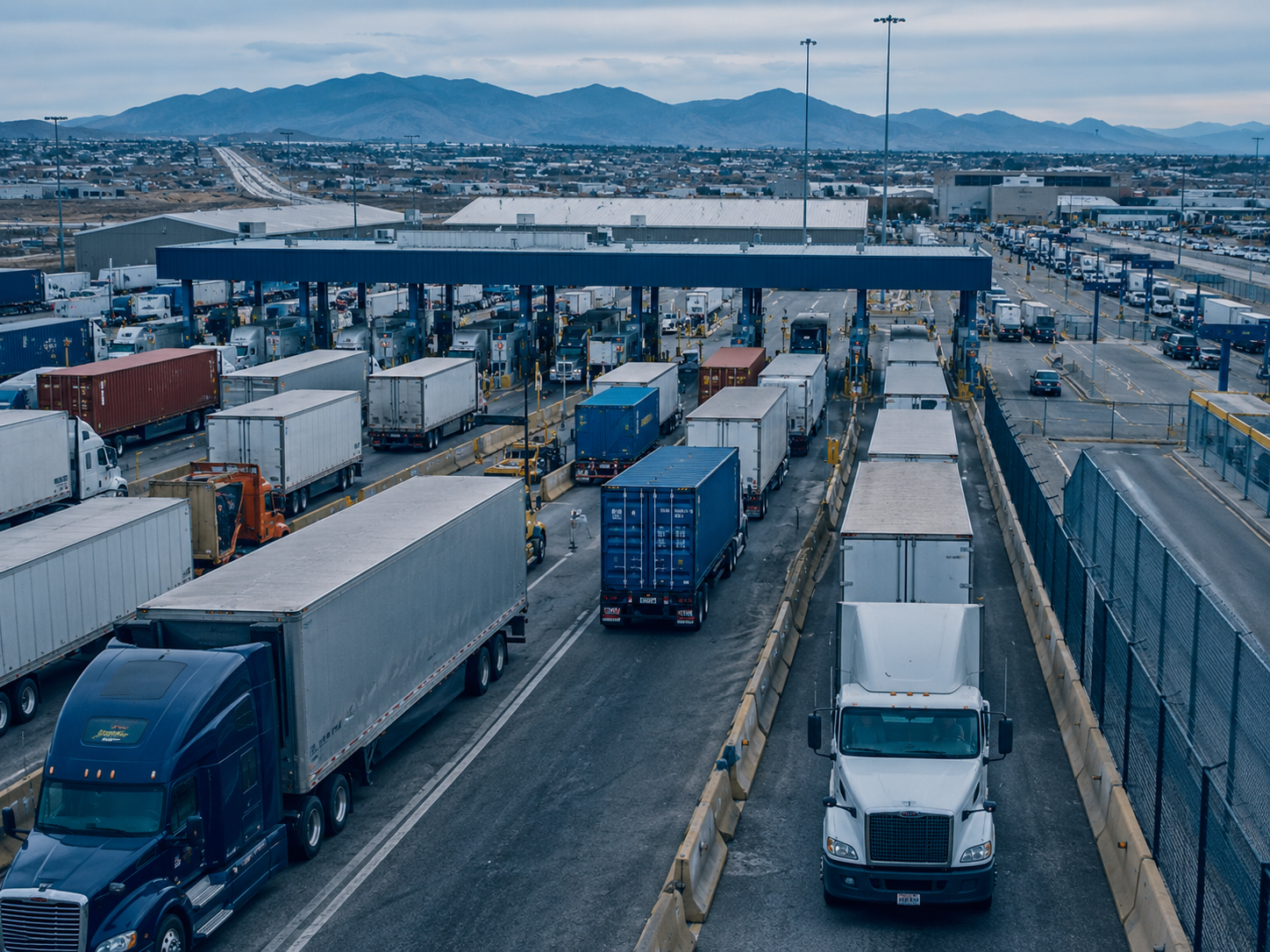
Laredo is the highest-volume U.S. land port of entry, and the primary crossing for Mexican produce, processed foods, and beverages entering by truck. Entries at Laredo are handled by FDA's Division of Southwest Imports, which covers Texas, with FDA offices at the World Trade Bridge and the Lincoln-Juarez Bridge. Because most Laredo cargo is Mexican produce and food moving by truck — often perishable — pesticide, Salmonella, and decomposition detentions are common, and fast border-area sampling is essential.
Port Snapshot
What to Know About Laredo
- FDA Import Division
- The Division of Southwest Imports covers Texas, and its import compliance branch is based in Laredo. FDA replaced its old district names when it reorganized in 2024.
- Busiest Land Port
- Laredo is the highest-volume land border crossing in the United States for trade with Mexico.
- Top Commodities
- Mexican fresh produce, processed and packaged foods, beverages, and confectionery, including chili and tamarind candy covered by the lead alert 99-42.
- Truck-Borne, Perishable
- Most cargo crosses by truck and much is perishable, so detention timing and cold-chain handling are critical.
- Bilingual Trade
- Laredo's import base is heavily Spanish-speaking, and brokers here typically operate bilingually.
- Border-Area Sampling
- Sampling can be arranged at Laredo-area warehouses and cold storage where detained truck shipments are held.
Common at This Port
Detentions We See Most Here
Given Laredo's Mexican produce and food mix, these are among the most common detentions here:
Produce — Pesticides
Illegal pesticide residues on raw produce.
Read more IA 99-19Food — Salmonella
Catch-all Salmonella detention for foods.
Read more IA 45-02Illegal Colors
Non-permitted or undeclared colors in foods.
Read more IA 99-42Toxic Elements — Lead & More
Covers Mexican chili and tamarind candy and some spices. Since October 23, 2026, lead and other toxic-element tests require a LAAF lab.
Official FDA textLocal Logistics
How Detention Response Works at Laredo
-
Read the Notice, Note the Division
Confirm the charge, respond-by date, and the FDA compliance officer — for Laredo entries this is the Division of Southwest Imports. Loop in your customs broker.
-
Arrange Local Sampling
A LAAF-ready sampler is arranged at the Laredo-area warehouse or facility holding the detained goods, working from a written sampling plan under chain of custody.
-
Test, Package & Submit
LAAF analytes such as mycotoxins, toxic elements, Listeria, and melamine go to a LAAF-accredited lab, which submits results directly to FDA. Pesticide, Salmonella, and color tests use an ISO/IEC 17025 lab, and the package goes to the compliance office named on the notice. FDA makes the final admissibility decision.
The detention process itself is the same nationwide — see the detention-to-refusal timeline and the Detention Help Center. What varies by port is the FDA import division, the commodity mix, and local sampling and storage logistics.
Be Realistic
Honest Notes on Laredo Detentions
Set expectations honestly
- The process is federal, not local. FDA applies the same detention rules at every port; what differs is the import division, commodity mix, and local logistics — not the legal standard.
- Local storage clocks still run. Demurrage and warehouse charges accrue while goods sit detained at the port, so acting quickly matters here as everywhere.
- Release isn't removal. Clearing a shipment at this port doesn't lift an import alert; that's a separate removal petition.
- We coordinate, FDA decides. We arrange sampling and testing near the port to give your evidence its best footing — but FDA makes the final admissibility decision.
Common Questions
Laredo Detention Questions
Direct answers to what importers ask most about FDA detentions at the Laredo border.
Which FDA office handles detentions at Laredo?
Entries at the Laredo land border are handled by FDA's Division of Southwest Imports, part of the Office of Inspections and Investigations. It covers Texas, has FDA offices at the World Trade Bridge and the Lincoln-Juarez Bridge, and its import compliance branch is based in Laredo. The compliance officer named on your Notice of FDA Action works within that division.
What imports are most often detained at Laredo?
As the busiest U.S. land crossing for Mexican trade, Laredo mainly handles fresh produce, processed foods, beverages, and confectionery. Common detentions include pesticide residues on produce, Salmonella, illegal or undeclared colors, lead in chili and tamarind candy under Import Alert 99-42, and decomposition on perishable produce.
Does perishable truck cargo change how Laredo detentions work?
Yes. Because most Laredo cargo crosses by truck and much of it is perishable Mexican produce, the cold-chain clock is a central concern. Fast border-area sampling matters, since product can degrade and storage costs accrue quickly while a shipment is held.
Where is sampling done for Laredo detentions?
Detained truck shipments are typically held at Laredo-area warehouses or cold-storage facilities. A LAAF-ready sampler collects representative samples under a written sampling plan and chain of custody at the facility where your shipment is located.
Do Laredo detentions need a LAAF-accredited lab?
Only when the charge involves an analyte on FDA's LAAF list. As of November 2026, it covers mycotoxins such as aflatoxins, toxic elements (arsenic, cadmium, lead, and mercury), Listeria monocytogenes, and melamine and cyanuric acid. Those tests go to a LAAF-accredited lab, which submits results directly to FDA. Pesticide, Salmonella, and color-additive tests use an ISO/IEC 17025 laboratory. The rule is the same at every port.
Sources: FDA OII field leadership contacts and Texas import offices; FDA Import Alert 99-42; FDA LAAF program.
Related
Related Guides
Detention Help Center
Notice, timeline, testing, cost, and removal — the full detention playbook.
Get help ProductsProducts & Industries
Detention testing guides by product category, from seafood to botanicals.
Browse categories PortsAll Service Areas
Browse FDA detention testing coverage at major U.S. ports of entry.
All portsDetained at Laredo?
Send the Notice — We'll Coordinate Locally
Send your Notice of FDA Action and confirm the port. You'll get a case-specific read on the testing your charge requires and how to move quickly given local sampling and storage logistics.
Urgent detention matters receive priority intake review.
FDA Detention Sampling is an independent private company. We are not affiliated with, endorsed by, or part of the U.S. Food and Drug Administration. This guide is general information about FDA import detention at the Laredo port of entry; FDA's import division structure and procedures can change, and the instructions on your specific Notice of FDA Action control. Sampling, laboratory testing, documentation, and coordination services do not guarantee FDA release, admissibility, acceptance of laboratory results, removal from any import alert, or any specific regulatory outcome. FDA makes the final admissibility decision.