Product & Industry Guide
FDA Detention Testing for Nuts & Dried Fruit
Tree nuts and dried fruit are frequently detained for aflatoxins and other mycotoxins, along with pesticides and Salmonella. Here's why FDA holds these shipments, which import alerts apply, and why aflatoxin testing must use a LAAF-accredited laboratory.
The Short Version
Why Nuts & Dried Fruit Shipments Get Detained
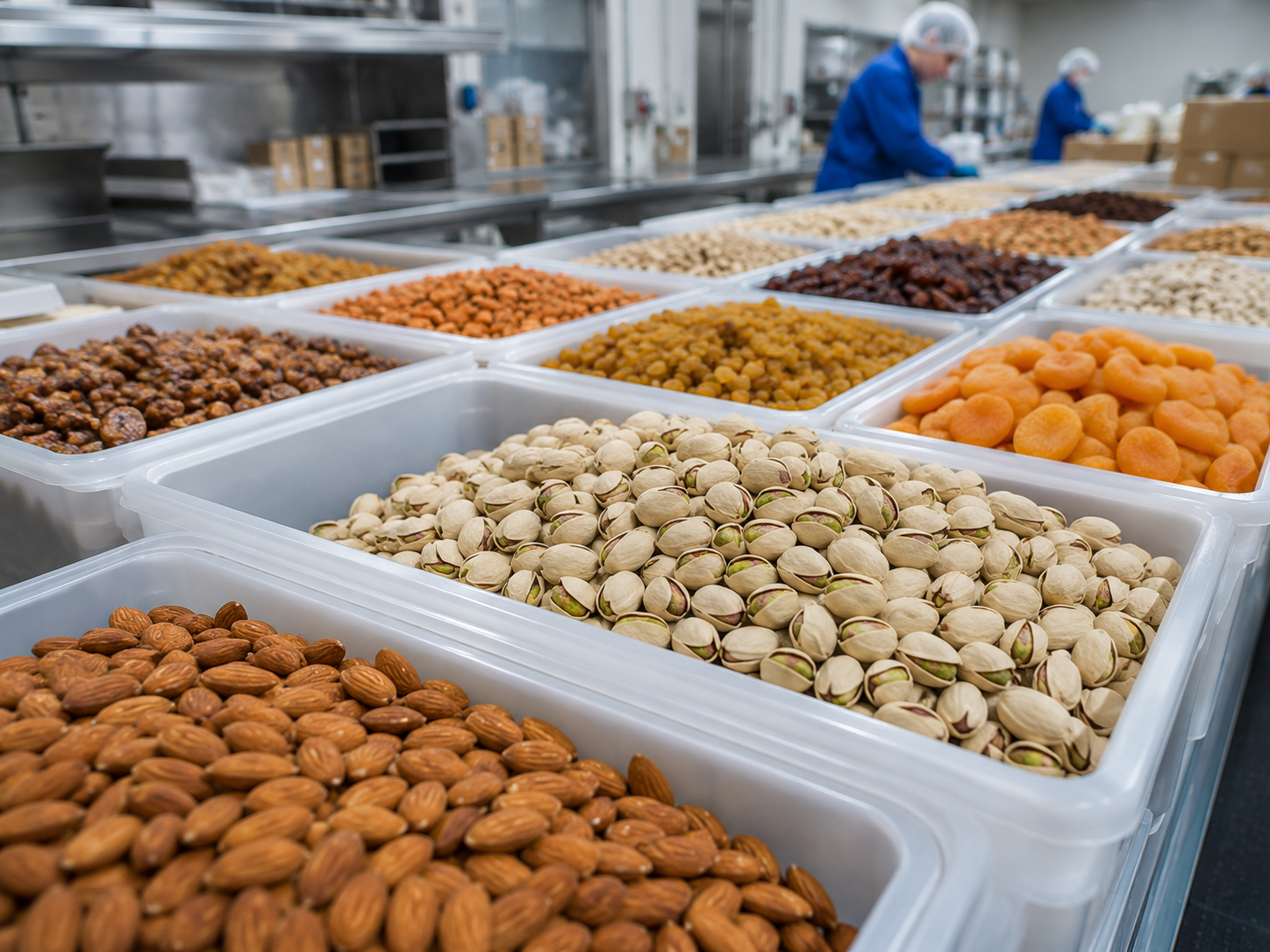
Nuts and dried fruit are detained most often for mycotoxins — especially aflatoxins — with pesticides and Salmonella also common. Tree nuts like pistachios, almonds, and peanuts, and dried fruits like figs and raisins, are prone to mold growth that produces aflatoxins and ochratoxin, particularly when grown or stored in warm, humid conditions. Because this contamination is uneven across a lot, sampling design is critical. The exact charge — a specific mycotoxin, a pesticide, or a pathogen — determines the analysis.
The Alerts That Apply
Import Alerts That Commonly Hit Nuts & Dried Fruit
These are among the most frequent detentions in this category. Select any alert for a full plain-language guide:
Food Products — Mycotoxins
Aflatoxins and other mycotoxins in peanuts, pistachios, Brazil nuts, pine nuts, figs, and nut candies. Release testing requires a LAAF-accredited laboratory.
Read the guide IA 99-19Food Products — Salmonella
Salmonella in nuts and dried fruit, which have been linked to outbreaks.
Read the guide IA 99-05Raw Produce — Pesticides
Illegal pesticide residues on nuts and dried fruit treated as raw agricultural products.
Read the guideThe Common Charges
What Nuts & Dried Fruit Gets Charged For
- Aflatoxins
- The signature nut and dried-fruit charge: carcinogenic mold toxins (B1, B2, G1, G2). FDA's action level is 20 ppb total aflatoxin for foods, including peanuts, pistachios, and Brazil nuts. Common in pistachios, peanuts, figs, and almonds.
- Ochratoxin A
- Another mycotoxin found in dried fruit and some nuts, tied to storage and humidity.
- Salmonella
- A zero-tolerance pathogen charge on nuts and dried fruit linked to contamination or outbreaks.
- Pesticide Residues
- Residues above U.S. tolerances on nuts and dried fruit grown with agricultural chemicals.
- Filth
- Insect infestation or fragments, common in stored dried products.
- Uneven Contamination
- Aflatoxin hotspots mean a small contaminated fraction can fail an otherwise clean-looking lot — which is why sampling design matters so much.
The Testing
What Nuts & Dried Fruit Testing Involves
-
LAAF-Ready, Representative Sampling
Because aflatoxin contamination is highly uneven, a LAAF-ready sampler collects many representative increments across the lot under a written sampling plan and chain of custody. Sampling design is often the difference between a valid and an invalid result.
-
Analyte-Matched Analysis
The charge dictates the method: LC-MS/MS or HPLC with fluorescence for aflatoxins and ochratoxin, microbiological culture for Salmonella, or multi-residue screening for pesticides. Mycotoxin tests must use a LAAF-accredited laboratory. Salmonella and pesticide tests use an ISO/IEC 17025 laboratory.
-
Package & Submit
For mycotoxin charges, the LAAF laboratory submits the results directly to FDA with the sampling records. For Salmonella or pesticide charges, the analytical package goes to the compliance office named on the notice. FDA makes the final admissibility decision.
Aflatoxin testing requires a LAAF-accredited laboratory. Since December 1, 2024, mycotoxin testing to support release of detained food, and the testing used for import alert removal, must be done by a LAAF-accredited lab with LAAF-ready sampling records. Aflatoxin clusters in hotspots, so a defensible sampling plan matters as much as the analysis. See the mycotoxin alert guide (IA 23-14) and our chain of custody guide.
Be Realistic
Honest Notes on Nuts & Dried Fruit Detentions
Set expectations honestly
- Aflatoxin can't be washed out. If a lot is contaminated above action levels, testing confirms it — mycotoxins are not removed by rinsing, and a positive result reflects the true condition.
- Sampling design can make or break it. Because contamination is uneven, an inadequate sampling plan can produce a misleading result and a rejected package — for better or worse.
- Zero-tolerance means zero. For Salmonella, a positive in a representative sample is disqualifying.
- Release isn't removal. Clearing one shipment doesn't lift an alert on the firm or country; that's a separate removal petition.
- No guaranteed outcome. We coordinate defensible sampling and testing to give your evidence its best footing — but FDA decides admissibility.
Common Questions
Nuts & Dried Fruit Detention Questions
Direct answers to what nut and dried-fruit importers ask most about aflatoxin, sampling, and LAAF.
Why does FDA detain nuts and dried fruit?
Nuts and dried fruit are detained most often for mycotoxins, especially aflatoxins, and also for Salmonella and pesticide residues. Tree nuts and dried fruits are prone to mold growth that produces aflatoxins and ochratoxin, particularly in warm, humid growing or storage conditions. The charge on the Notice of FDA Action identifies which applies.
Which import alerts apply to nuts and dried fruit?
Common alerts include Import Alert 23-14 for mycotoxins including aflatoxins, Import Alert 99-19 for Salmonella in food products, and Import Alert 99-05 for pesticide residues on raw agricultural products. The 23-14 Red List includes many peanut, pistachio, Brazil nut, and pine nut products. Filth charges can appear under additional alerts.
Does aflatoxin testing for detained nuts need a LAAF-accredited laboratory?
Yes. Since December 1, 2024, mycotoxin testing to support admission of detained food, and the consecutive testing used for removal from Import Alert 23-14, must be done by a LAAF-accredited laboratory. The lab must have the sampler's qualifications, a written sampling plan, and a collection report, and it submits the results directly to FDA.
What is FDA's action level for aflatoxin in nuts?
FDA's action level is 20 parts per billion (ppb) total aflatoxin for human foods, with the same 20 ppb level in the compliance guides for peanuts and peanut products, pistachios, and Brazil nuts. A representative result above that level supports FDA's refusal.
Why is sampling so important for aflatoxin testing?
Aflatoxin contamination is highly uneven, clustering in hotspots within a lot. A small contaminated fraction can cause the lot to exceed action levels even if most of it is clean, so a representative sampling plan with many increments across the lot is essential. A poorly designed sample can produce a misleading result, and for LAAF testing the sampling plan and collection report go to FDA with the results.
Can aflatoxin be removed to clear a detention?
No. Aflatoxin and other mycotoxins are not removed by washing or rinsing, so if a lot is contaminated above FDA action levels, testing confirms rather than clears it. The reliable path is representative testing that demonstrates the lot is within action levels where that is genuinely the case.
Do Salmonella or pesticide tests on nuts need a LAAF lab?
Not yet. FDA phases LAAF in by analyte. As of November 2026, it covers mycotoxins such as aflatoxins, toxic elements (arsenic, cadmium, lead, and mercury), Listeria monocytogenes, and melamine. Salmonella and pesticide tests on nuts use an ISO/IEC 17025 laboratory accredited for the method. FDA adds analytes over time on its LAAF Dashboard.
Does clearing a shipment remove the import alert?
No. Clearing an individual shipment does not remove the firm, product, or country from the import alert. Future shipments continue to be detained without physical examination until a separate removal petition, often supported by a series of compliant shipments, is filed and approved by FDA.
Sources: FDA Import Alert 23-14; FDA action levels for poisonous or deleterious substances; FDA LAAF program and LAAF Dashboard.
Related
Related Guides
Private Laboratory Testing
How the analytical package that supports a release is built and submitted.
Read the guide HubAll Products & Industries
Browse detention testing guides for every product category we cover.
Browse categories HelpDetention Help Center
Notice, timeline, testing, cost, and removal — the full detention playbook.
Get helpNuts & Dried Fruit Detained?
Send the Notice — We'll Match the Right Test
Send your Notice of FDA Action and the product involved. You'll get a quick, honest read on what your charge requires and what testing can do.
Urgent detention matters receive priority intake review.
FDA Detention Sampling is an independent private company. We are not affiliated with, endorsed by, or part of the U.S. Food and Drug Administration. This guide is general information about FDA import detention and testing for nuts & dried fruit; the charge and instructions on your specific Notice of FDA Action, and the applicable import alert, control. Sampling, laboratory testing, documentation, and coordination services do not guarantee FDA release, admissibility, acceptance of laboratory results, removal from any import alert, or any specific regulatory outcome. FDA makes the final admissibility decision.