
Product & Industry Guide
FDA Detention Testing for Cosmetics Imports
Imported cosmetics are detained for color additive violations, prohibited ingredients, microbial contamination, and labeling problems. Here's why FDA holds cosmetic shipments, which import alerts apply, and what testing involves.
The Short Version
Why Cosmetics Shipments Get Detained
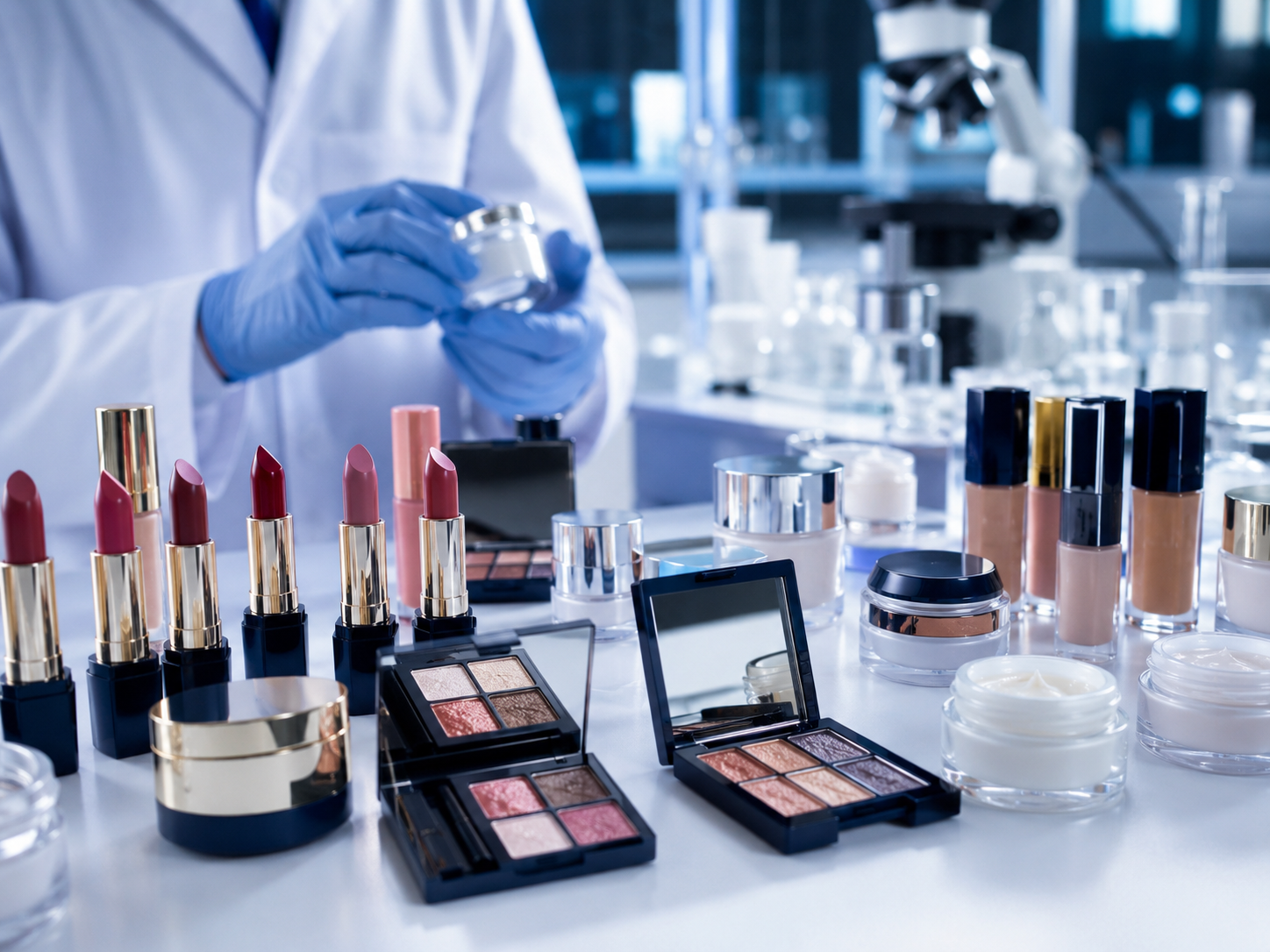
Cosmetics are detained most often for color additive violations, along with prohibited ingredients, contamination, and labeling issues. Cosmetic colors must be approved for that specific use, some must be FDA batch-certified, and any color must be declared — a failure in any of these can make a cosmetic adulterated or misbranded. Cosmetics can also be flagged for prohibited or restricted ingredients, microbial contamination, or heavy metals. Because a single shipment often holds many products and shades, each may need to be evaluated separately, which shapes both testing and cost.
The Alerts That Apply
Import Alerts That Commonly Hit Cosmetics
These are among the most frequent detentions in this category. Select any alert for a full plain-language guide:
Cosmetics — Color Additives
Non-permitted, uncertified, or undeclared color additives in cosmetics — the leading cosmetic charge.
Read the guide IA 45-02Illegal / Undeclared Colors
The related color-additive framework; some color charges cross over between foods and cosmetics contexts.
Read the guide IA 66-40Drugs — GMP
Where a product is a cosmetic-drug (e.g., sunscreen, some skin treatments), drug GMP requirements can apply.
Read the guideThe Common Charges
What Cosmetics Gets Charged For
- Non-Permitted Color
- A color additive not approved for that cosmetic use makes the product adulterated — and it can't be relabeled into compliance.
- Uncertified Color
- A color that must be FDA batch-certified, used without valid certification lot numbers, can render the cosmetic adulterated.
- Undeclared Color
- A color present but not properly declared is a misbranding charge — sometimes correctable through labeling.
- Prohibited Ingredients
- Ingredients banned or restricted in U.S. cosmetics, or contaminants like certain impurities, can trigger detention.
- Microbial Contamination
- Bacterial contamination in water-based cosmetics such as creams and lotions.
- Heavy Metals
- Lead and other metals, particularly in color cosmetics and some imported traditional products.
The Testing
What Cosmetics Testing Involves
-
Product-by-Product Sampling
Because a shipment often contains many products and shades, a trained sampler collects representative samples of each relevant item under documented custody — this is where cosmetic testing scope grows.
-
Analyte-Matched Analysis
The charge dictates the method: chromatographic color-additive analysis, ICP-MS for heavy metals, microbiological testing for contamination, or certification review for uncertified colors, at an appropriate lab.
-
Package & Submit
Results, methods, certification records, and custody documentation are assembled into a package and submitted to FDA, typically via ITACS, for review. FDA makes the final admissibility decision.
Many products means many tests. A mixed cosmetic shipment can require product-by-product analysis, which drives scope and cost — planning an efficient sampling scheme matters. See the cosmetics color alert (IA 53-06).
Be Realistic
Honest Notes on Cosmetics Detentions
Set expectations honestly
- A non-permitted color can't be declared away. If the color itself isn't allowed in that cosmetic, labeling changes don't help — the product stays adulterated.
- Uncertified vs. non-permitted differ. An uncertified color may be resolved with valid certification documentation; a non-permitted color cannot.
- Testing many items is costly. Each product and shade may need separate analysis, so a mixed shipment can be slow and expensive to clear.
- Release isn't removal. Clearing one cosmetic shipment doesn't lift an alert on the firm; that's a separate removal petition.
- No guaranteed outcome. We coordinate the right testing and documentation to give your evidence its best footing — but FDA decides admissibility.
Related
Related Guides
Private Laboratory Testing
How the analytical package that supports a release is built and submitted.
Read the guide HubAll Products & Industries
Browse detention testing guides for every product category we cover.
Browse categories HelpDetention Help Center
Notice, timeline, testing, cost, and removal — the full detention playbook.
Get helpCosmetics Detained?
Send the Notice — We'll Match the Right Test
Send your Notice of FDA Action and the product involved. You'll get a quick, honest read on what your charge requires and what testing can do.
Urgent detention matters receive priority intake review.
FDA Detention Sampling is an independent private company. We are not affiliated with, endorsed by, or part of the U.S. Food and Drug Administration. This guide is general information about FDA import detention and testing for cosmetics; the charge and instructions on your specific Notice of FDA Action, and the applicable import alert, control. Sampling, laboratory testing, documentation, and coordination services do not guarantee FDA release, admissibility, acceptance of laboratory results, removal from any import alert, or any specific regulatory outcome. FDA makes the final admissibility decision.