Import Alert Guide
Import Alert 53-06 — Cosmetics, Color Additive Violations
A plain-language guide to FDA Import Alert 53-06, which allows detention without physical examination of cosmetics with color additive violations. What it covers, its three kinds of violation, and what per-shipment testing or labeling evidence typically involves.
The Short Version
What Is Import Alert 53-06?
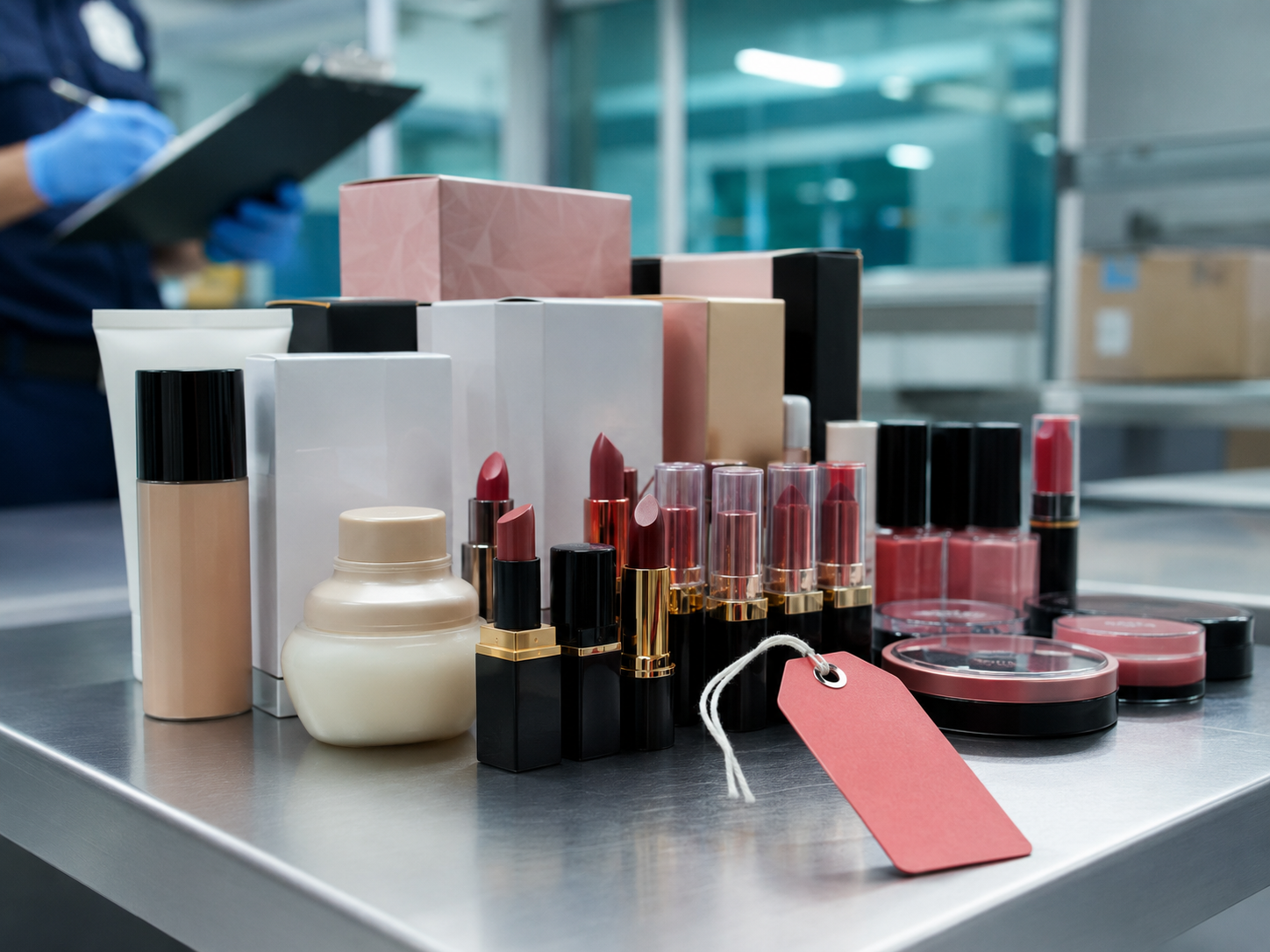
Import Alert 53-06 permits FDA to detain, without physical examination, cosmetics from Red List firms that appear to have color additive violations. Color additives in cosmetics are tightly regulated: a color must be approved for that use, some colors must be batch-certified by FDA, and any color must be properly declared on the label. A failure in any of these can make a cosmetic adulterated, misbranded, or both — and once a firm is listed, its cosmetic shipments are automatically detained.
- Alert Number
- 53-06
- Products Covered
- Cosmetics from Red List firms — lipstick, eye makeup, mascara, creams, and other colored products
- Non-Permitted Color
- Adulteration — an unapproved (non-permitted) color additive is present
- Uncertified Color
- Adulteration — a color required to be FDA batch-certified is used without valid certification
- Undeclared Color
- Misbranding — a color additive is not properly declared on the label
- Testing Rule
- Cosmetics are outside the LAAF program; an accredited laboratory with validated methods is used
- Removal Requests
- Importalerts2@fda.hhs.gov
- Official Text
- FDA Import Alert 53-06
The Background
Three Kinds of Color Violation, One Alert
Color is central to most cosmetics, which is exactly why this alert can be so costly — a single imported shipment often contains many products in many shades, and each may need to be evaluated separately. FDA has used 53-06 for decades to stop cosmetics with color problems that fall into three overlapping buckets:
Non-permitted color — a color additive that isn't approved for that cosmetic use (or is used in a way it wasn't approved for, such as certain reds and yellows that are not permitted in the eye area). Its presence makes the cosmetic adulterated, and clearing it generally means proving by analysis that the non-permitted color isn't there.
Uncertified color — some color additives must be batch-certified by FDA. If such a color is used without valid certification lot numbers, the cosmetic can be treated as adulterated. Here the response often centers on producing valid certification documentation.
Undeclared color — a color additive present but not properly declared on the label makes the cosmetic misbranded. For retail "consumer commodity" cosmetics, the ingredient (and color) declaration requirements are strict, and this can sometimes be corrected through labeling. (Carmine is a notable special case: undeclared carmine can be treated as both adulterated and misbranded.)
The Evidence
What Clearing a Shipment Typically Involves
The right path depends on which kind of violation applies — analysis, certification documentation, a labeling correction, or a combination. Reading the notice's charge is the essential first step.
-
Identify the Charge and Color
The notice indicates whether the issue is a non-permitted color, an uncertified color, an undeclared color, or a combination, and typically names the color. That determines whether the response is analytical, documentary, a labeling correction, or several of these.
-
Test, Certify, and/or Correct
For a non-permitted color, a sampler collects representative samples with LAAF-ready custody records, and an accredited laboratory analyzes them, often product by product and shade by shade. For an uncertified color, valid FDA certification lot numbers are assembled, with purchase records that trace the color to the lot owner and the amount bought. For an undeclared permitted color, the ingredient declaration is corrected.
-
Package Goes to the Compliance Office
Analytical results, certification records, custody documentation, and any corrected labeling go to the FDA Division compliance office named on the notice of detention, following FDA's private laboratory analytical package procedure. FDA confirms certification lot numbers with its color certification staff, may collect audit samples, and makes the final admissibility decision.
Many products, many shades, separate tests. Because a cosmetic shipment can carry dozens of colored products, testing under 53-06 is often product-by-product, which is where costs add up — planning a defensible, efficient sampling scheme matters. We coordinate that piece; see our sample collection and chain of custody guide.
Be Realistic
What This Alert Means in Practice
Honest limitations
- Testing many products is expensive. Because each colored product may need separate sampling and analysis, a single mixed cosmetic shipment can be costly and slow to clear.
- A non-permitted color can't be "declared away." If the color itself isn't allowed in that cosmetic, correcting the label doesn't fix it — the product remains adulterated regardless of disclosure.
- Seasonal timing hurts. Cosmetics are common holiday and gift items; detention delays can cause products to miss critical retail windows.
- Release is not removal. Clearing one shipment does not take the firm off the alert. Removal requires showing the firm has resolved the formulation or labeling problem, in a petition sent to Importalerts2@fda.hhs.gov under FDA's Regulatory Procedures Manual, Chapter 9-8. Our sister service, FDA Registration Assistance, prepares removal petitions.
Common Questions
Import Alert 53-06 Questions
Direct answers to what cosmetics importers ask most about 53-06 detentions.
What is FDA Import Alert 53-06?
Import Alert 53-06 lets FDA detain, without physical examination, cosmetics on its Red List that appear adulterated or misbranded because of color additive violations. A color must be approved for that use, some colors must come from an FDA-certified batch, and every color must be declared correctly on the label.
What are the color additive violations under Import Alert 53-06?
There are three. A non-permitted color is not approved, or not approved for that use, such as some colors in the eye area. An uncertified color needs FDA batch certification but has no valid certification lot number. An undeclared color is present but missing from the label or listed under a name FDA does not use, such as only a CI number.
Can a 53-06 detention be fixed by relabeling?
Sometimes. If a permitted color is simply undeclared, FDA's alert lists a corrected label as evidence for release. A corrected label does not fix a non-permitted color, which needs analysis showing the color is absent. Undeclared carmine is treated as both adulterated and misbranded.
What does FDA accept as proof of color certification under Import Alert 53-06?
Valid FDA certification lot numbers, plus purchase records that trace the color to the original owner of the lot and the amount bought. FDA confirms the lot numbers with its color certification staff before it decides.
Does Import Alert 53-06 testing need a LAAF-accredited lab?
No. The LAAF program covers food testing, and cosmetics are outside it. An accredited laboratory using validated methods is still expected, and the results go in under FDA's private laboratory analytical package procedure. We use LAAF-ready custody records anyway, because FDA reviews how the samples were collected.
Why is Import Alert 53-06 so expensive to deal with?
A cosmetic shipment can carry dozens of products and shades, and each one that relies on analysis may need its own sample and test. A sampling plan built around the charge and the colors named on the notice keeps the number of tests down.
How do I get a shipment released or a firm removed under Import Alert 53-06?
To release one shipment, send evidence matched to the charge: lab results showing a non-permitted color is absent, valid certification lot numbers with purchase records, or a corrected label. It goes to the compliance office named on the notice. To remove a firm, petition FDA at Importalerts2@fda.hhs.gov with proof the cause was resolved.
Removal petitions are usually prepared by a regulatory consultant or counsel, such as our sister service, FDA Registration Assistance.
Sources: FDA Import Alert 53-06; FDA private laboratory testing; 21 CFR Part 70.
Related
Related Alerts & Guides
Foods — Illegal / Undeclared Colors
The food counterpart — the same illegal-and-undeclared color logic applied to food products.
Read the guide IA 66-40Drugs — GMP
Another regulated-product alert — drug manufacturing practice rather than cosmetic colors.
Read the guide IndustryCosmetics Testing Support
Why FDA detains cosmetics, from color additives to labeling and contaminants, and the testing each charge needs.
View industriesCosmetics Detained Under 53-06?
Bring Us the Notice — We'll Sort Testing From Certification From Labeling
Send your FDA Notice of Action, the color and charge it cites, and your product list. You'll get an honest, case-specific read on the most efficient path — analytical, certification, labeling, or a mix — before any commitment.
Urgent detention matters receive priority intake review.
FDA Detention Sampling is an independent private company. We are not affiliated with, endorsed by, or part of the U.S. Food and Drug Administration. This guide is a plain-language summary of Import Alert 53-06; the official alert text published by FDA is authoritative and controls. Sampling, laboratory testing, documentation, and coordination services do not guarantee FDA release, admissibility, acceptance of laboratory results, removal from any import alert, or any specific regulatory outcome. FDA makes the final admissibility decision.