Product & Industry Guide
FDA Detention Testing for Dairy Imports
Imported dairy products are detained for pathogens like Listeria, additives, and country-specific alerts. Here's why FDA holds dairy shipments, which import alerts apply, and why Listeria and melamine testing must use a LAAF-accredited laboratory.
The Short Version
Why Dairy Products Shipments Get Detained
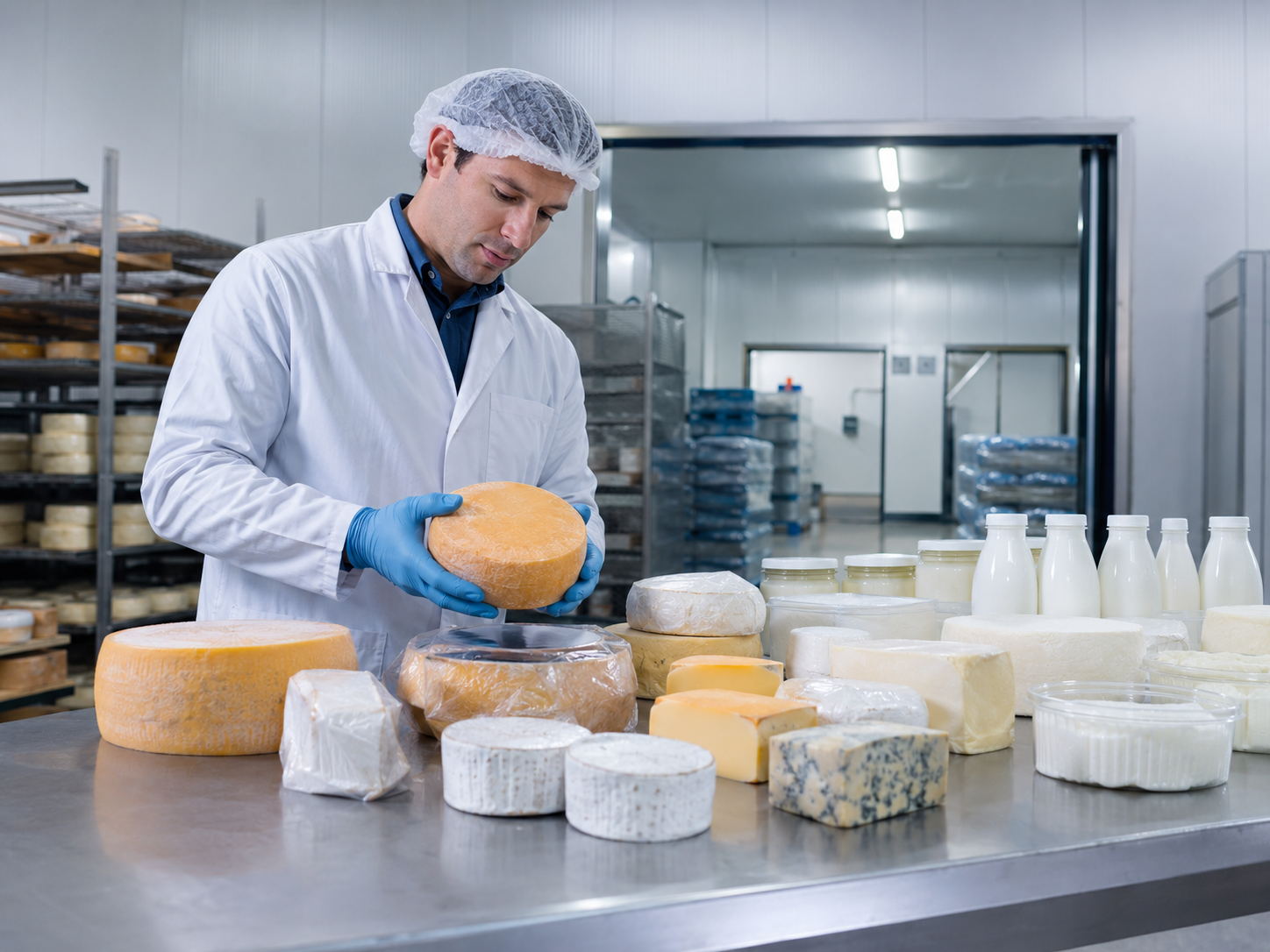
Dairy products are detained mainly for pathogens — especially Listeria monocytogenes in soft cheeses — along with additives and country- or product-specific alerts. Soft and soft-ripened cheeses carry a well-known Listeria risk, and some are subject to country-specific alerts. Dairy can also be flagged for Salmonella, unapproved additives or colors, animal-drug residues in milk, and labeling issues. Because dairy is perishable and cold-chain dependent, detention timing matters, and the exact charge determines whether testing targets a pathogen, a residue, or an additive.
The Alerts That Apply
Import Alerts That Commonly Hit Dairy Products
These are among the most frequent detentions in this category. Select any alert for a full plain-language guide:
Food Products — Salmonella
Salmonella in dairy products and dairy-containing foods.
Read the guide IA 45-02Illegal / Undeclared Colors
Non-permitted or undeclared colors in cheeses and other dairy products.
Read the guide IA 12-10Cheese — Microbiological Contamination
All cheese: Listeria, Salmonella, and pathogenic E. coli. Listeria release testing requires a LAAF-accredited laboratory.
Official FDA text IA 12-03French Soft & Soft-Ripened Cheese
Soft cheeses from French makers not on the Green List of plants certified by the French government.
Official FDA text IA 99-30China Milk Products — Melamine
All milk products, milk-derived ingredients, and milk-containing foods from China. Melamine testing requires a LAAF lab.
Official FDA text IA 99-43Ready-to-Eat Foods — Insanitary Conditions
Covers cheese found with Staphylococcus aureus at 10,000 CFU/g or more, plus repeat Salmonella firms.
Official FDA textThe Common Charges
What Dairy Products Gets Charged For
- Listeria monocytogenes
- The signature dairy charge, enforced for all cheese under Import Alert 12-10 and for French soft cheese under 12-03. A positive is disqualifying, and since December 2, 2025, release testing requires a LAAF-accredited lab.
- Salmonella
- A zero-tolerance pathogen charge across dairy products and dairy-containing foods.
- Country-Specific Alerts
- Soft and soft-ripened cheese from France is detained unless the maker is on FDA's Green List, and milk products from China are detained for melamine under Import Alert 99-30.
- Additives & Colors
- Non-permitted or undeclared colors and additives in cheeses and processed dairy.
- Animal-Drug Residues
- Residues of veterinary drugs in milk from treated animals, above tolerances. Drug-residue tests do not require a LAAF lab yet.
- Labeling & Standards of Identity
- Non-compliant labeling, undeclared allergens, or products not meeting U.S. standards of identity for a named dairy food.
The Testing
What Dairy Products Testing Involves
-
Fast, Cold-Chain-Aware Sampling
Because dairy is perishable, a LAAF-ready sampler collects representative samples quickly under temperature control, a written sampling plan, and chain of custody before the product degrades.
-
Analyte-Matched Analysis
The charge dictates the method: microbiological culture for Listeria, Salmonella, or S. aureus, LC-MS/MS for melamine or drug residues, or color-additive analysis. Listeria and melamine tests must use a LAAF-accredited laboratory. Salmonella, drug-residue, and color tests use an ISO/IEC 17025 laboratory.
-
Package & Submit
For Listeria and melamine charges, the LAAF laboratory submits the results directly to FDA with the sampling records. For other charges, the analytical package goes to the compliance office named on the notice. FDA makes the final admissibility decision.
Listeria and melamine testing require a LAAF-accredited laboratory. Since December 2, 2025, testing for these analytes to support release of detained food must be done by a LAAF-accredited lab with LAAF-ready sampling records. Dairy is perishable, so book the sampler and lab together on day one. See how the deadlines work in the detention-to-refusal timeline.
Be Realistic
Honest Notes on Dairy Products Detentions
Set expectations honestly
- Perishable product may not wait. Even fast testing takes days; some dairy degrades before a result is possible, which factors into whether testing is worthwhile for a given lot.
- Zero-tolerance pathogens mean zero. For Listeria monocytogenes or Salmonella, a positive in a representative sample is disqualifying — testing can't remove a pathogen that's present.
- Standards of identity matter. A product that doesn't meet the U.S. standard for a named dairy food faces a charge testing alone won't resolve.
- Release isn't removal. Clearing one dairy shipment doesn't lift an alert on the firm or country; that's a separate removal petition.
- No guaranteed outcome. We coordinate fast, defensible testing to give your evidence its best footing — but FDA decides admissibility.
Common Questions
Dairy & Cheese Detention Questions
Direct answers to what dairy importers ask most about Listeria, melamine, and LAAF.
Why does FDA detain dairy imports?
Dairy products are detained mainly for pathogens, especially Listeria monocytogenes in cheese, and also for Salmonella, Staphylococcus aureus, melamine in milk products from China, unapproved additives or colors, animal-drug residues in milk, and labeling or standard-of-identity issues. The charge on the Notice of FDA Action identifies which applies.
Which import alerts apply to dairy?
Common alerts include Import Alert 12-10 for microbiological contamination of cheese, 12-03 for soft and soft-ripened cheese from France, 99-30 for melamine in milk products from China, 99-43 for ready-to-eat foods including cheese with Staphylococcus aureus, 99-19 for Salmonella, and 45-02 for illegal or undeclared colors.
Why is Listeria such a concern in dairy?
Listeria monocytogenes is a serious pathogen that can grow even at refrigeration temperatures and is particularly associated with soft and soft-ripened cheeses. Because of the health risk, FDA applies strict controls, and a positive result in a representative sample is disqualifying. This is why all cheese falls under Import Alert 12-10 and French soft cheese has its own alert, 12-03.
Does Listeria testing for detained cheese need a LAAF-accredited laboratory?
Yes. Since December 2, 2025, testing for Listeria to support admission of detained food must be done by a LAAF-accredited laboratory. The lab must have the sampler's qualifications, a written sampling plan, and a collection report, and it submits the results directly to FDA. The same rule applies to melamine testing under Import Alert 99-30.
How can a China milk product detained for melamine be released?
Import Alert 99-30 allows two routes: a LAAF-accredited laboratory analysis of a representative sample showing no melamine or cyanuric acid, or English documentation, such as formulation, batch records, and labeling, showing the product contains no milk or milk-derived ingredients. Removal requires at least five consecutive non-violative shipments plus third-party evidence of controls.
How is dairy tested for an FDA detention?
Because dairy is perishable, a LAAF-ready sampler collects representative samples quickly under temperature control, a written sampling plan, and chain of custody. The laboratory then analyzes with the method matched to the charge: microbiological culture for Listeria, Salmonella, or S. aureus, LC-MS/MS for melamine or drug residues, or color-additive analysis.
Which dairy tests require a LAAF lab?
FDA phases LAAF in by analyte. As of November 2026, it covers mycotoxins such as aflatoxins, toxic elements (arsenic, cadmium, lead, and mercury), Listeria monocytogenes, and melamine and cyanuric acid. Salmonella, drug-residue, and color tests on dairy use an ISO/IEC 17025 laboratory. Staphylococcus aureus was recently added to the LAAF list, so check FDA's LAAF Dashboard for its current status before testing.
Does clearing a dairy shipment remove the import alert?
No. Clearing an individual dairy shipment does not remove the firm, product, or country from the import alert. Future shipments continue to be detained without physical examination until a separate removal petition, often supported by at least five non-violative shipments, is filed and approved by FDA.
Sources: FDA Import Alert 12-10, 12-03, 99-30, and 99-43; FDA LAAF program and LAAF Dashboard.
Related
Related Guides
Private Laboratory Testing
How the analytical package that supports a release is built and submitted.
Read the guide HubAll Products & Industries
Browse detention testing guides for every product category we cover.
Browse categories HelpDetention Help Center
Notice, timeline, testing, cost, and removal — the full detention playbook.
Get helpDairy Products Detained?
Send the Notice — We'll Match the Right Test
Send your Notice of FDA Action and the product involved. You'll get a quick, honest read on what your charge requires and what testing can do.
Urgent detention matters receive priority intake review.
FDA Detention Sampling is an independent private company. We are not affiliated with, endorsed by, or part of the U.S. Food and Drug Administration. This guide is general information about FDA import detention and testing for dairy products; the charge and instructions on your specific Notice of FDA Action, and the applicable import alert, control. Sampling, laboratory testing, documentation, and coordination services do not guarantee FDA release, admissibility, acceptance of laboratory results, removal from any import alert, or any specific regulatory outcome. FDA makes the final admissibility decision.