
Product & Industry Guide
FDA Detention Testing for Seafood Imports
Seafood is one of the most heavily detained import categories. Here's why FDA holds seafood shipments, which import alerts apply, and what sampling and testing typically involve to support a release.
The Short Version
Why Seafood Shipments Get Detained
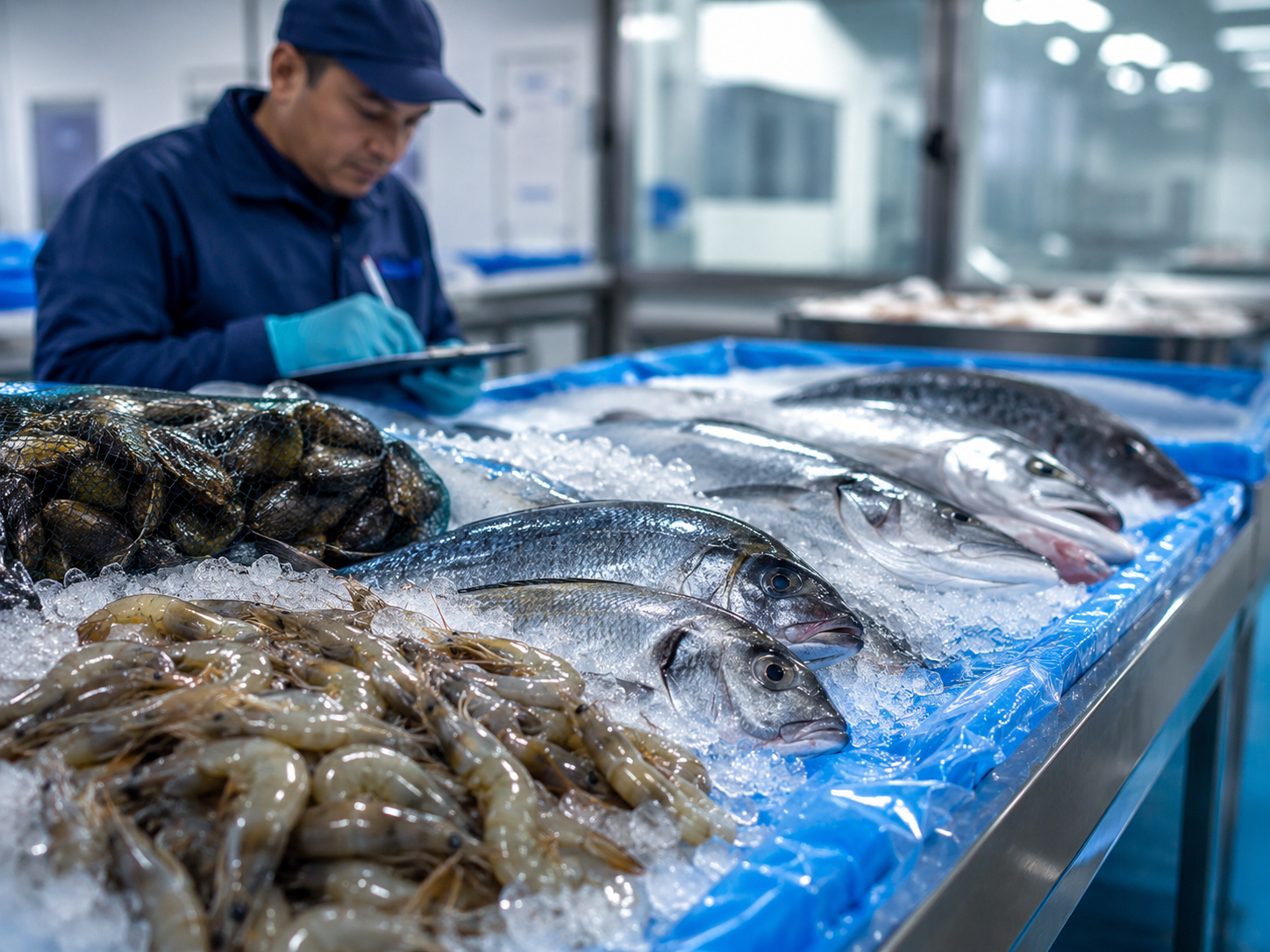
Seafood faces more import alerts than almost any other food category, driven by pathogens, aquaculture drug residues, decomposition, and filth. Wild and farmed seafood carry different risks: wild catch is often flagged for Salmonella, histamine (in scombroid species), or decomposition, while aquacultured seafood is frequently detained for unapproved veterinary drug residues. Because much seafood is perishable and cold-chain dependent, detention timelines matter enormously — testing has to move fast and be built on a representative, custody-documented sample.
The Alerts That Apply
Import Alerts That Commonly Hit Seafood
These are among the most frequent seafood detentions. Select any alert for a full plain-language guide:
Seafood — Salmonella
Zero-tolerance pathogen detention; LAAF-accredited testing on a representative sample.
Read the guide IA 16-124Aquaculture — Unapproved Drugs
Unapproved veterinary drug residues in farmed seafood (except chloramphenicol and nitrofurans).
Read the guide IA 16-131China Aquaculture — Drug Residues
Countrywide detention of certain Chinese aquaculture species for drug residues.
Read the guideThe Common Charges
What Seafood Gets Charged For
- Salmonella
- A zero-tolerance pathogen charge — its presence in a ready-to-eat or raw seafood sample renders the product adulterated. The most common seafood alert.
- Aquaculture Drug Residues
- Unapproved animal drugs (nitrofurans, chloramphenicol, malachite green, fluoroquinolones) used in farming — detected by sensitive LC-MS/MS methods.
- Histamine / Decomposition
- In scombroid fish (tuna, mahi-mahi, mackerel), elevated histamine signals decomposition and is a safety hazard — a frequent charge on these species.
- Filth
- Insect fragments, parasites, or other filth found on inspection can trigger detention across many seafood types.
- Listeria
- In certain ready-to-eat seafood, Listeria monocytogenes is a serious pathogen charge with its own testing demands.
- Veterinary Drug Carve-Outs
- Chloramphenicol and nitrofurans have their own dedicated alerts — the correct charge determines the exact analytes to test.
The Testing
What Seafood Testing Involves
-
Fast, Cold-Chain-Aware Sampling
Because seafood is perishable, a trained sampler collects representative samples quickly and under proper temperature control, with documented chain of custody — before the product degrades further.
-
Analyte-Matched Analysis
The charge dictates the method: microbiological culture for Salmonella or Listeria, LC-MS/MS for drug residues, or a histamine assay for scombroid species — at an appropriately accredited (often LAAF) lab.
-
Package & Submit
Results, methods, and custody records are assembled into an analytical package and submitted to FDA, typically via ITACS, for review. FDA makes the final admissibility decision.
Perishability is the seafood wildcard. Every day matters when product is on ice. See how the deadlines work in the detention-to-refusal timeline, and how sampling is documented in our chain of custody guide.
Be Realistic
Honest Notes on Seafood Detentions
Set expectations honestly
- Perishable product may not wait for the process. Even fast testing takes days; some seafood degrades before a result is possible, which factors into whether testing is worthwhile for a given lot.
- Decomposition can't be undone. If a histamine or decomposition charge reflects the true condition of the product, testing will confirm rather than clear it.
- Zero-tolerance means zero. For Salmonella or Listeria, a positive is a positive — testing can show a clean representative sample but can't remove a pathogen that's present.
- Release isn't removal. Clearing one seafood shipment doesn't lift an alert on the firm or country; that's a separate removal petition.
- No guaranteed outcome. We coordinate fast, defensible testing to give your evidence its best footing — but FDA decides admissibility.
Related
Related Guides
Private Laboratory Testing
How the analytical package that supports a seafood release is built and submitted.
Read the guide HubAll Products & Industries
Browse detention testing guides for every product category we cover.
Browse categories HelpDetention Help Center
Notice, timeline, testing, cost, and removal — the full detention playbook.
Get helpSeafood Detained?
Send the Notice — We'll Move Fast on Perishable Cargo
Send your Notice of FDA Action, the species, and where the shipment is held. You'll get a quick, honest read on the testing your charge requires and whether it fits your product's timeline.
Urgent detention matters receive priority intake review.
FDA Detention Sampling is an independent private company. We are not affiliated with, endorsed by, or part of the U.S. Food and Drug Administration. This guide is general information about FDA import detention and testing for seafood; the charge and instructions on your specific Notice of FDA Action, and the applicable import alert, control. Sampling, laboratory testing, documentation, and coordination services do not guarantee FDA release, admissibility, acceptance of laboratory results, removal from any import alert, or any specific regulatory outcome. FDA makes the final admissibility decision.